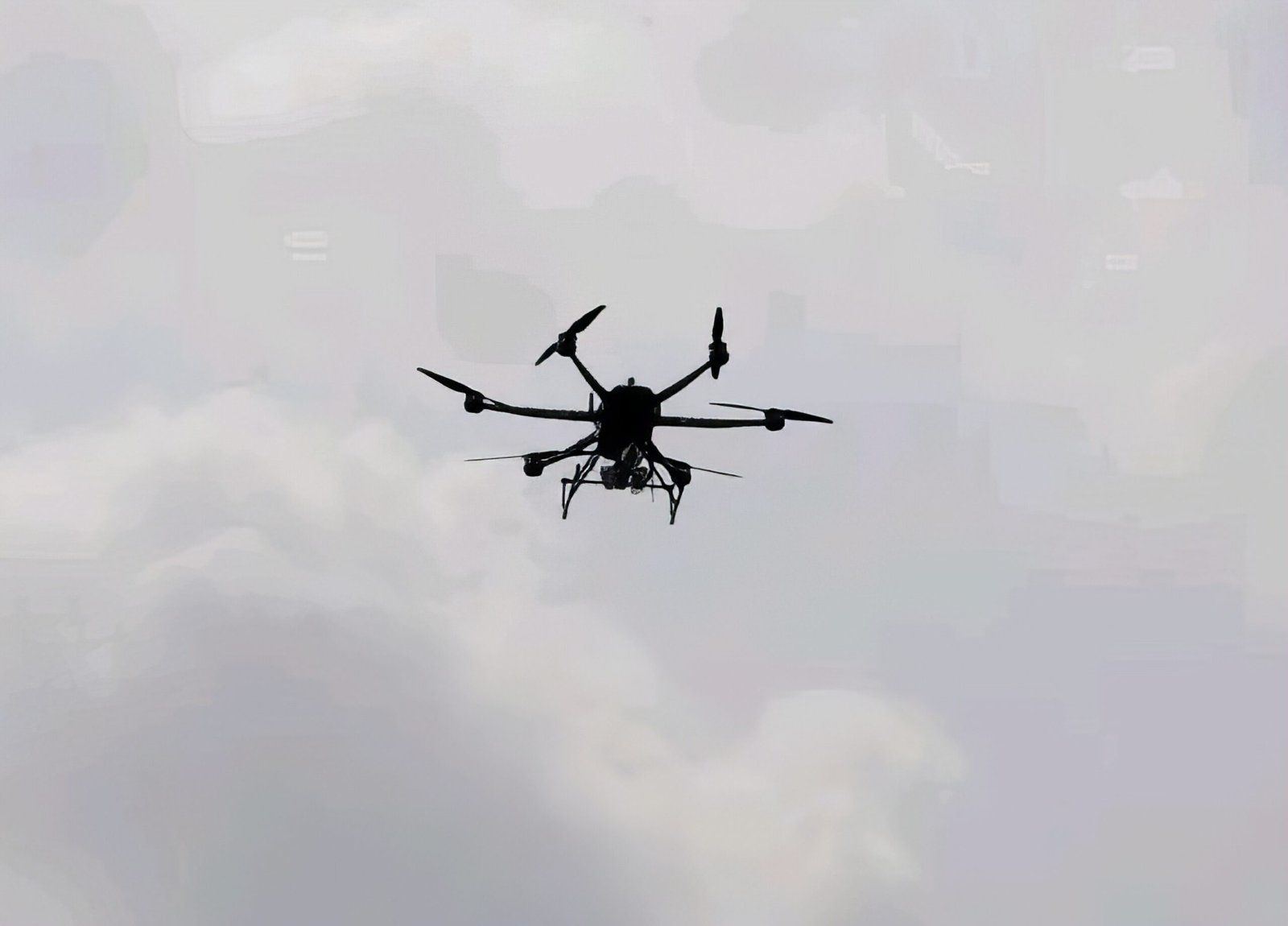
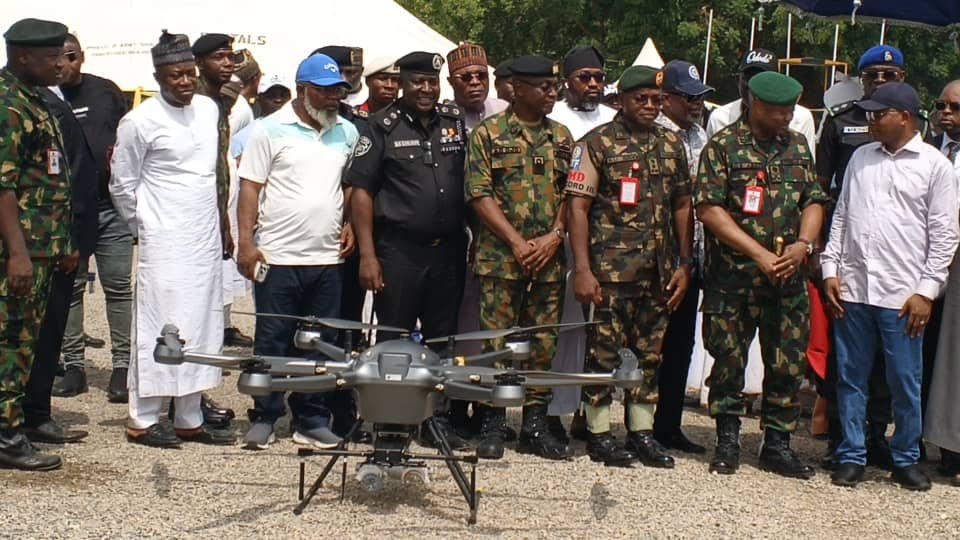
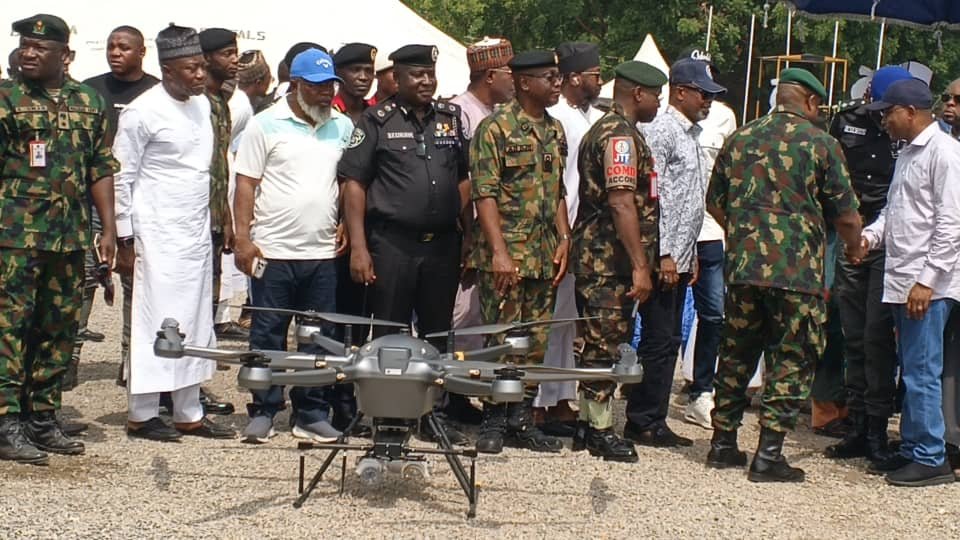
 The morning air at Chari Maigumeri Barracks carried a quiet tension as soldiers, officials, and security stakeholders gathered beneath the bright Lokoja sun. Boots crunched against the gravel, uniforms rustled in the breeze, and all eyes fixed on the sleek, steel‑grey frames of two newly acquired HP‑20 State Asset Drones—machines that glinted sharply under the light like sentinels ready to take flight.
In a move that underscored his administration’s unyielding commitment to public safety, the Executive Governor of Kogi State, His Excellency Alhaji Ahmed Usman Ododo, FCA, unveiled the drones, describing them as a decisive tool in shutting every window of opportunity against criminal elements.
The ceremony, charged with anticipation, drew top military commanders and government officials whose presence added weight to the moment. The hum of generators, the distant echo of marching drills, and the low murmur of conversations created a backdrop that emphasized the gravity of the state’s evolving security architecture.
Addressing the audience, Governor Ododo spoke with a firm, resonant tone that carried across the parade ground. He highlighted the drones’ advanced surveillance and rapid‑response features—capabilities designed to pierce through thick forest canopies, sweep across rugged terrains, and transmit real‑time intelligence with razor‑sharp clarity.
“These priority drones have advanced surveillance, monitoring, and response capabilities,” he said, gesturing toward the aircraft. “They can operate in difficult terrains, provide real-time intelligence, enable precision-led operations against terrorists, and offer early detection of suspicious movements.”
He explained that the deployment would tighten coordination among security agencies, enabling faster, intelligence-driven mobilization across the state’s vast landscapes—from riverine communities to dense border forests.
Governor Ododo’s voice hardened as he reaffirmed his administration’s resolve.
“Let me be very clear: this administration will not falter. We will not surrender our communities. We will not allow bandits or terrorists to take over any part of our land. The government must be in charge—not bandits, not kidnappers.”
His words hung in the air like a warning carried on the wind.
He emphasized that Kogi’s strategic position—serving as a gateway between Northern and Southern Nigeria—makes it a magnet for migrating criminal networks. The state’s forests, once exploited as hideouts, are now under increasing technological watch.
“We studied these threats carefully, and we responded with action, not excuses,” he said.
Reflecting on two years of security reforms, the Governor noted that Kogi has built a sturdy framework anchored on technology, community vigilance, inter-agency synergy, and unwavering political will.
“Today, Kogi State ranks among the most peaceful states in Nigeria, and our goal is clear—to make it the safest state in the country.”
Brigadier General K.U. Sidi, Commander of the 12 Brigade Nigerian Army, described the drones as a “game changer,” noting that their deployment places Kogi at the forefront of modern security innovation. The Chief of Army Staff, Major General Waidi Shuaibu—represented by Brigadier General O.S. Abai—echoed this sentiment, highlighting the recent establishment of the 21 Battalion in the state as a strategic boost to troop presence and rapid-response capability.
Across the state, the reaction has been one of relief and renewed confidence. Stakeholders and residents alike have welcomed the initiative, viewing it as a bold, tangible demonstration of the government’s commitment to safeguarding lives and property.