 At 2:14 a.m. on January 3, 2026, the power grid in central Caracas flickered and went dark. For most residents, it looked like another routine blackout in a country where failing infrastructure had become a fact of life. This time, though, the cause wasn’t mechanical.
It was intentional. According to intelligence officials, U.S. cyber units had penetrated Venezuela’s electrical network weeks earlier, identifying weak points and preparing for a coordinated shutdown. The outage marked the opening move of Operation Absolute Resolve — the mission that would end with the capture of President Nicolás Maduro. Minutes after the lights failed, explosions sounded across the capital.
Interviews with former intelligence officers, regional analysts, and diplomats suggest a far more complicated operation than the official narrative of a straightforward law‑enforcement action. For years, the U.S. Drug Enforcement Administration had pursued a narcotrafficking case against Maduro. Internal documents show the agency grew increasingly frustrated, believing diplomatic caution repeatedly blocked attempts to detain him.
The calculus shifted in late 2025. Intercepted communications indicated Maduro was preparing to relocate to a fortified compound outside Caracas — a site far more difficult to penetrate.
A senior intelligence official summarized the moment: “It was now or never.”
The Russian Factor
Around the same time, U.S. analysts detected heightened Russian activity in Venezuela, including the arrival of military advisers and electronic‑warfare specialists. Several officials interpreted the move as Moscow preparing to expand its security footprint — potentially complicating any future attempt to seize Maduro. The operation’s timeline accelerated.
Satellite imagery reviewed by independent analysts shows that the first wave of strikes targeted radar and air‑defense systems. The goal was temporary paralysis, not destruction, to give Special Operations teams a narrow window to move. Two Special Forces units entered Caracas simultaneously from different directions. One advanced toward Fuerte Tiuna, the military complex where Maduro was believed to be staying; the other secured escape routes and communication hubs.
A former U.S. military planner called the mission “one of the most complex urban extractions attempted in the Western Hemisphere.” Sources say Maduro was captured in a secure bunker beneath the complex. The operation lasted less than 12 minutes. By the time Venezuelan forces regrouped, the extraction aircraft was already heading toward international airspace.
Internal Venezuelan communications reviewed by regional analysts reveal confusion and contradictory orders in the hours that followed. Some units were told to mobilize; others were instructed to stand down. The appointment of Vice President Delcy Rodríguez as interim president was not improvised. Venezuelan legal scholars say the decision had been quietly negotiated among key political actors anticipating a crisis — though not necessarily this one. The military’s muted response stood out. Analysts point to years of purges, factionalism, and economic strain that left the armed forces too fractured to mount a coordinated reaction.
Governments across the region scrambled to respond. Some privately welcomed Maduro’s removal while publicly condemning the method. Others worried about the precedent: if Washington could remove a sitting president, what prevented other powers from attempting the same?
European diplomats warned that the operation undermined the post‑World War II legal framework governing state behaviour.
Russia and China’s Calculations
Both countries issued sharp statements, but intelligence analysts say their deeper concern is strategic. The operation signaled a U.S. willingness to act unilaterally in a region where both nations have invested heavily. For decades, non‑intervention has been a central principle of international relations. The capture of a sitting president on foreign soil — without multilateral approval — challenges that foundation. The UN Security Council convened emergency sessions, but divisions among major powers blocked any unified response. The crisis underscored the limits of multilateral governance amid rising geopolitical competition.
Venezuela’s vast oil reserves make the country a strategic prize. Analysts warn that any shift in control or production could ripple through global markets, affecting prices and geopolitical alignments.
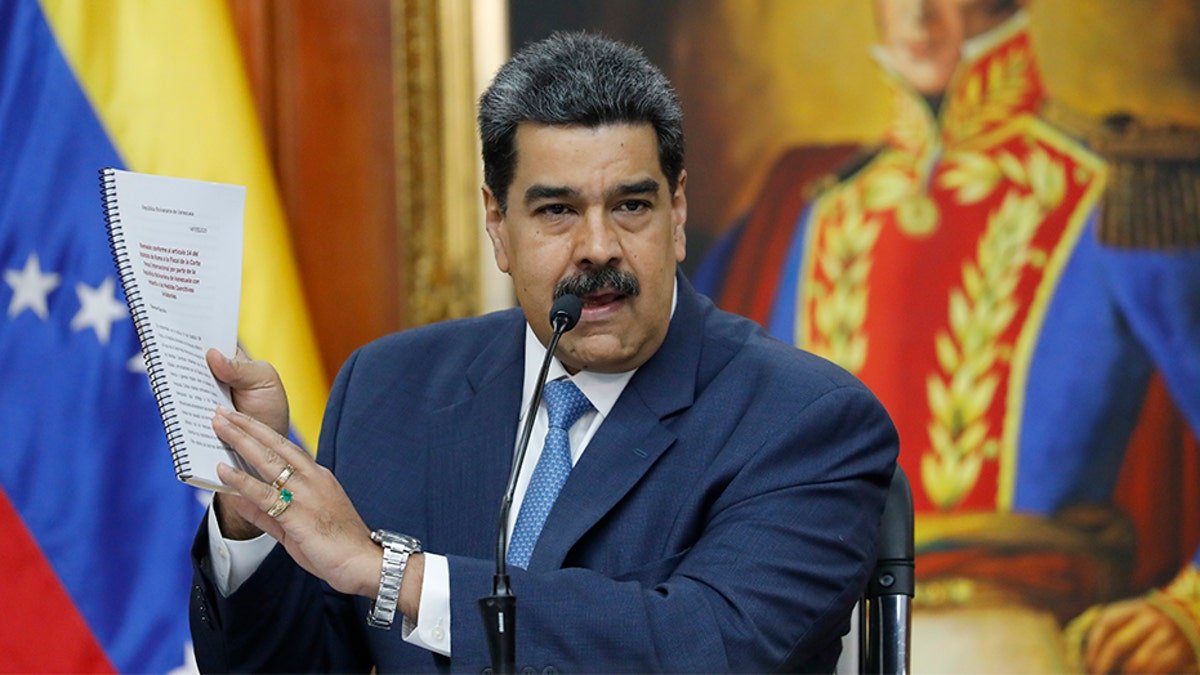
Maduro now awaits trial in a U.S. federal court. Venezuela faces a leadership vacuum, a fractured military, and a population exhausted by years of turmoil. The United States must now navigate the consequences of an operation that achieved its tactical objective but opened a far broader strategic dilemma.
Across interviews with diplomats, intelligence officials, and legal scholars, one conclusion emerges: the global order is entering a period where the rules are less certain, the risks are higher, and the boundaries of power are being redrawn in real time.