By Ebenezer Adurodija
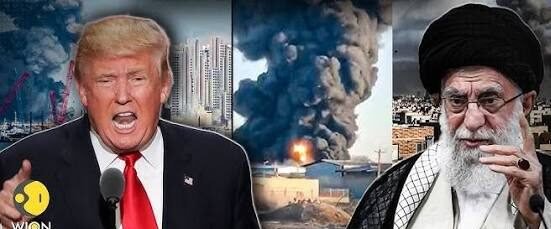
Iran is entering one of the most turbulent periods in its modern history as a convergence of internal instability, regional realignment, and global economic disruption reshapes the country’s political landscape. The coordinated U.S.–Israeli strikes of February 28, 2026—targeting more than 2,000 military and security sites and killing Supreme Leader Ayatollah Ali Khamenei—have exposed deep vulnerabilities within the Islamic Republic at a moment of heightened regional tension. What began as a targeted military operation has evolved into a crisis touching every layer of Iranian society, from the corridors of power in Tehran to the oil terminals of the Persian Gulf.
The sudden death of Iran’s supreme leader has created a rare power vacuum at the center of the state. For more than three decades, Khamenei served as the ultimate arbiter of Iran’s political, military, and ideological direction. His absence has left a system built around centralized authority struggling to find its footing. The strikes degraded key IRGC and internal security units, weakening Iran’s ability to coordinate large‑scale operations. Several senior commanders were killed or incapacitated, and communications infrastructure in multiple provinces was disrupted. Retaliatory attacks across the Gulf have been uneven—some highly coordinated, others seemingly improvised—reflecting strain within the command structure and uncertainty over who holds final authority.
Military analysts note that Iran’s doctrine relies heavily on synchronized action between its missile forces, naval units, cyber divisions, and regional proxies. The loss of senior leadership has fractured that coordination, leaving Iran capable of lashing out but less able to shape events strategically.
Economic hardship, inflation, and years of political repression had already eroded public trust. The conflict has intensified these pressures, with the rial weakening further and supply disruptions affecting essential goods. Long queues have formed outside banks and fuel stations in several cities, and reports of sporadic protests have emerged despite heightened security presence.
For many Iranians, the crisis is not only about foreign threats but about the state’s ability to protect its citizens and maintain basic services. The leadership vacuum has deepened fears of internal power struggles, prompting some families to stockpile food and cash in anticipation of prolonged instability.
Iran’s retaliatory missile strikes on Qatar, the UAE, Kuwait, Bahrain, and Saudi Arabia have accelerated a shift in regional dynamics. The attacks—unprecedented in their geographic spread—have pushed Gulf states into a tighter security embrace with the United States and its allies.
Governments that once balanced cautiously between Tehran and Washington have reinforced cooperation with U.S. and allied defense systems. Patriot and THAAD batteries across the Gulf were activated in coordinated fashion, and the UK deployed additional assets after its bases in Bahrain, Qatar, and Cyprus were also targeted.
Diplomats in the region describe a “closing of ranks” among Arab states, many of which had pursued cautious détente with Iran in recent years. That process now appears to be in retreat, replaced by a renewed emphasis on collective defense.
Iran’s “Axis of Resistance” has shown signs of fragmentation. Hezbollah fired rockets into Israel for the first time since 2024, but broader coordination across Iranian‑backed militias has been inconsistent. Iraqi militias issued threats but have taken limited action, constrained by domestic political pressures and fears of U.S. retaliation.
In Yemen, Houthi forces signaled readiness to escalate but have not launched major operations, raising questions about Iran’s ability to mobilize its partners during a leadership crisis. The once‑cohesive network now appears strained, with each group weighing its own survival against Tehran’s expectations.
The conflict has triggered significant instability in global energy markets, particularly around the Strait of Hormuz—a vital corridor for global oil and LNG flows. The strait has long been considered one of the world’s most sensitive geopolitical chokepoints, and recent events have underscored its vulnerability.
At least three commercial vessels were damaged by suspected projectiles between March 1 and 2. Major carriers, including Maersk, have begun rerouting traffic around the Cape of Good Hope—a detour that adds weeks to shipping times and millions in additional fuel costs. Insurers have withdrawn or repriced coverage for Gulf transits, with some firms refusing to insure vessels entering the strait altogether.
Port authorities in Oman and the UAE have reported a sharp decline in tanker departures, and satellite imagery shows clusters of vessels idling in safer waters as shipowners await clarity.
Market Reaction; Oil and gas markets responded sharply: Brent crude rose 13% in early March trading. European natural gas prices jumped 24%. Gold surged to record highs as investors sought safe havens. Global equities retreated, with energy‑dependent economies facing heightened volatility.
Even an OPEC+ announcement of increased production failed to stabilize markets, underscoring the scale of uncertainty. Economists warn that prolonged disruption could ripple through global supply chains, affecting everything from fuel prices to food imports.
The U.S.–Israeli campaign has been described as a “regime disruption” operation, targeting leadership, missile infrastructure, and internal security forces. The strikes were designed not only to degrade Iran’s military capabilities but to undermine its ability to coordinate a coherent response.
Iran has responded with missile attacks on Israel, U.S. bases, and Gulf states, but the reduced volume of fire suggests its capacity has been significantly weakened. Analysts caution, however, that Iran retains substantial missile stockpiles and could still escalate if internal pressures mount. The trajectory of the conflict remains uncertain, with both sides signaling readiness for further escalation. Diplomatic channels remain limited, and regional actors fear that a miscalculation could trigger a broader confrontation.
Iran’s most likely path is consolidation around the IRGC and the interim leadership. Despite internal strain, the regime retains significant coercive capacity, and the security apparatus has historically closed ranks during crises.
If elite competition intensifies, Iran could face internal fractures across clerical, political, and security institutions. Such fragmentation would weaken Iran’s regional influence and complicate efforts to manage the conflict.
Global economic pressure may push all parties toward back‑channel diplomacy, though the timing and terms remain unclear. Energy‑dependent economies in Asia and Europe have already urged restraint.
Given the scale of the conflict and the leadership vacuum, Iran may face extended uncertainty even after active hostilities decline. The state’s ability to restore internal cohesion will determine whether it can navigate the next phase of the crisis.
Iran now faces a convergence of internal and external pressures that will shape its political trajectory in the months ahead. The leadership vacuum has complicated decision‑making at a critical moment, while economic strain and public frustration continue to mount. Regionally, Iran’s position has weakened as neighboring states reassess their security priorities, and global markets remain unsettled by disruptions in the Strait of Hormuz.
As the conflict continues, Iran’s political institutions and security networks will be tested by the demands of wartime governance and shifting regional dynamics. The coming period will determine whether the state can stabilize its internal environment while navigating the broader strategic challenges unfolding across the Middle East.