By Ebenezer Adurodija
On a humid Tuesday morning, long before the city fully wakes, commuters gather at a fuel station where the queue snakes around the block. No one talks about politics. They talk about the heat, the wait, the rising prices — everything except the decisions that made those prices rise in the first place. A woman in a faded work uniform checks her watch for the third time. A driver leans against his car, scrolling through his phone, avoiding the news headlines he’s tired of reading. Everyone is here because of politics, yet almost no one wants to say the word.
Scenes like this play out every day. In classrooms where teachers buy their own supplies. On roads where potholes grow faster than repairs. In hospitals where patients wait hours for care. These moments feel personal, immediate, and frustrating — but they are also political, shaped by choices made far from the people who live with the consequences.
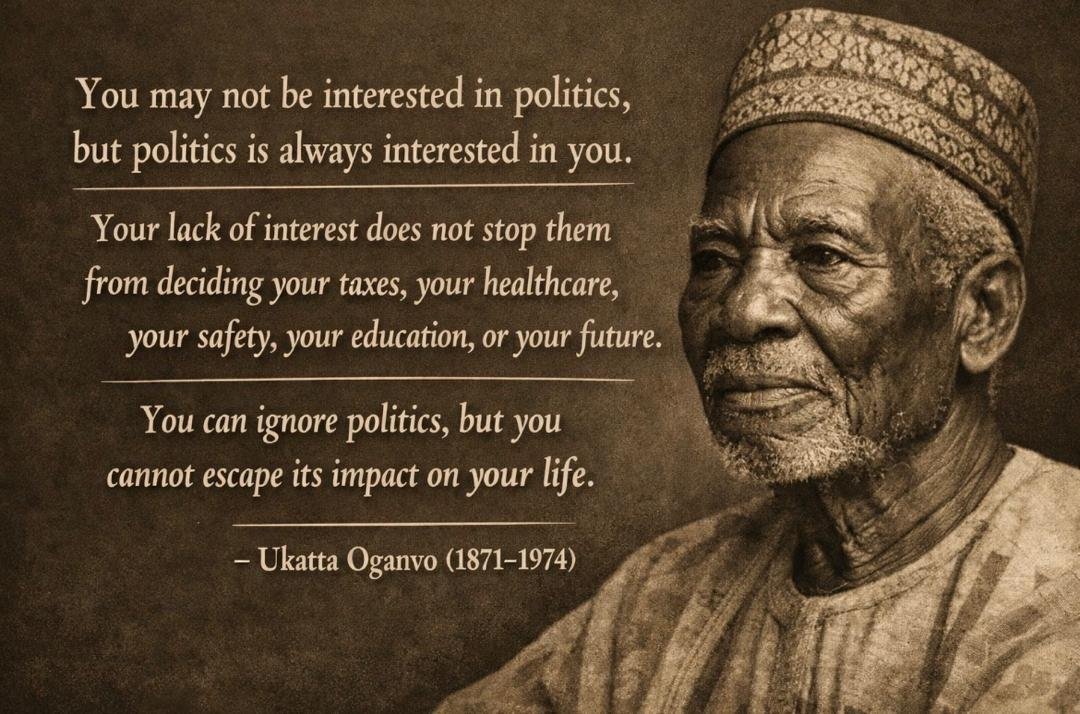
Politics has become something many try to escape, a noisy arena best avoided for the sake of sanity. But stepping back doesn’t place anyone outside its reach. If anything, it makes its influence more invisible, more pervasive, and more powerful.
Because politics, stripped of its drama, is simply the management of power — who holds it, how they use it, and who benefits from the choices they make. That power quietly shapes the price of fuel, the state of the roads, the quality of schools, and the opportunities available in a community. These aren’t abstract issues; they’re the architecture of everyday life.
When someone says, “I don’t do politics,” what they often mean is that they avoid the noise. They don’t debate online. They don’t attend rallies. They don’t vote. But disengagement doesn’t create neutrality; it creates absence. And absence leaves room for others to decide what the future looks like.
Policies will still be written. Taxes will still be set. Rights can expand or contract. The machinery of governance keeps moving, whether or not anyone is watching.
Ignoring politics is a bit like ignoring the rules of a game you’re already playing. You may not study the rulebook, but the rules still determine whether you win or lose.
Beyond the individual level, political decisions shape the systems that shape society — employment, security, healthcare access, business environments. These systems influence outcomes long before personal effort enters the picture. Even choosing not to participate indirectly affects who gets to make decisions on behalf of everyone else.
Of course, constant political immersion can be exhausting. No one needs to track every headline or argue every issue. The goal isn’t obsession; it’s awareness — enough to understand how decisions are made, who is making them, and how those choices ripple into daily life. Awareness is a form of agency, a way of refusing to be shaped entirely by forces you never engaged with.
You can stay apolitical. But politics will not stay away from you. It will continue to write parts of your story, whether you choose to hold the pen or not.